
Raccoon removal in St. Petersburg, FL
Critter Guys does raccoon removal in St. Petersburg, FL for homes along the bayous, the mangrove edges and the old brick-street neighborhoods. We trap humanely, keep mothers with their kits, and close the hole for good.
- Mother and kits kept together
- Latrine cleanup available
- Follows FWC trapping rules
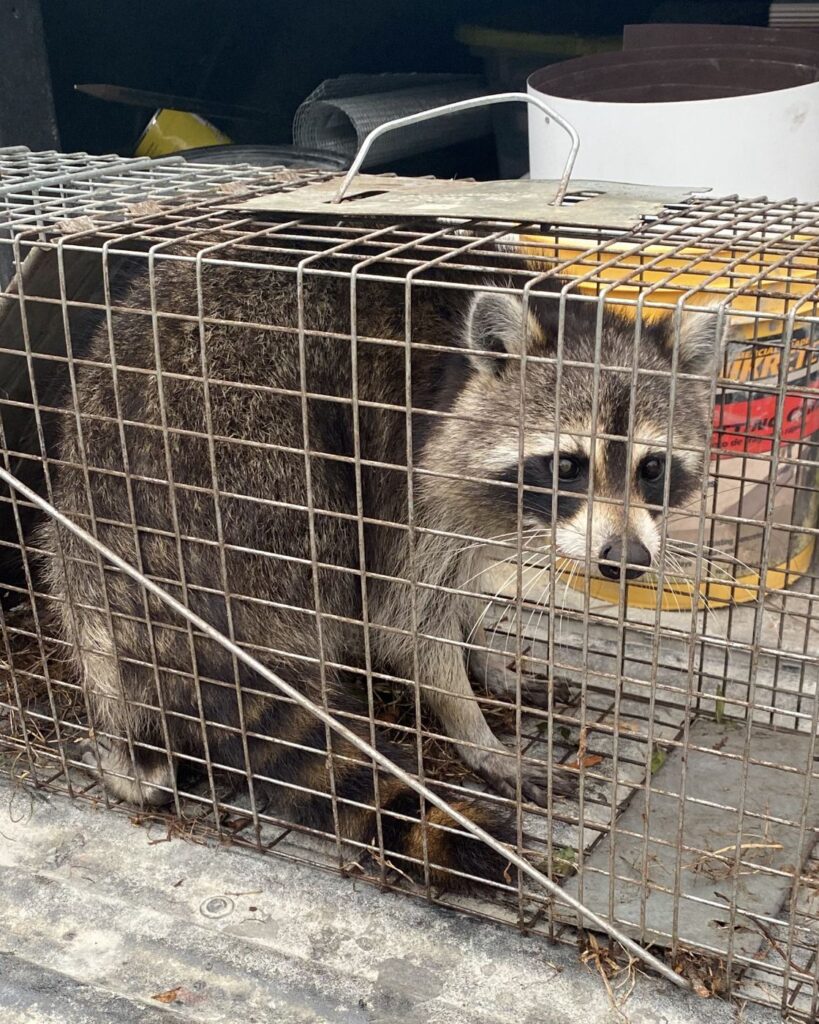
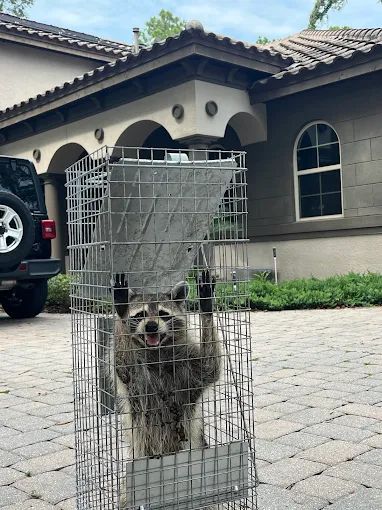
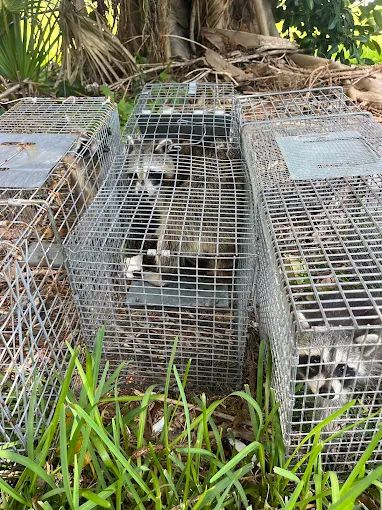
Raccoon in the attic? Start here
Tell us what you are hearing or seeing. We will get back to you, set up a visit and give you a straight answer on what it takes.
- Firm quote before any work starts
- Call, text or email, your pick
- Licensed and insured in Florida
Quick answer. Critter Guys provides raccoon removal in St. Petersburg, FL from attics, soffits, crawl spaces, chimneys and sheds. We inspect the property, confirm whether a mother has young, then remove the raccoons with humane live traps or one-way exits under FWC rules. After they’re out, we seal and repair the entry point and can clean the latrine area. Licensed and insured in Florida. Call or text (321) 203-6963.
Signs a raccoon has moved in with you
Raccoons are big animals, so they’re rarely subtle. These are the things St. Pete homeowners tell us they noticed before they called.
Heavy walking overhead at night
It sounds like a person, or a large dog, moving across the ceiling around 10 p.m. to 3 a.m. Squirrels and rats are lighter and quicker.
Chirps and whimpers in spring
A high, bird-like chattering from the attic or soffit between roughly February and June usually means a mother has kits up there.
A torn soffit or bent vent
Raccoons pull and push rather than chew. Look for a soffit panel hanging down, a crushed roof vent or a gap ripped open at the roof line.
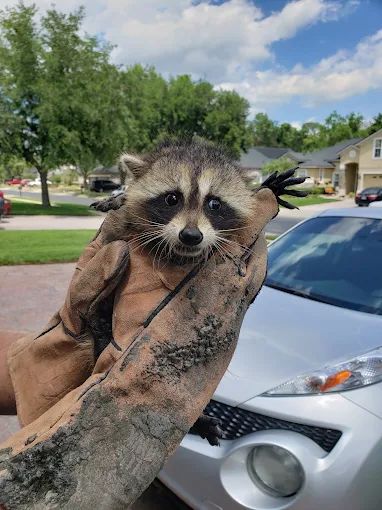
Muddy smudges on the downspout
Dark handprints on the stucco, gutter or downspout show the climbing route. On waterfront lots the prints are often muddy from the shoreline.
The same toilet spot every night
Raccoons use the same latrine over and over, often on the roof, a flat porch roof or in one corner of the attic.
Why St. Pete raccoons live so close to your roof
St. Petersburg is ringed by water. The mangroves at Weedon Island Preserve, the shoreline of Lake Maggiore at Boyd Hill, and every bayou and seawall from Coffee Pot Bayou to Clam Bayou give raccoons food and cover right next to houses. They forage the tide line for crabs and snails, then head inland to raid trash cans, pet bowls and fallen fruit.
When a female needs a den, she looks for the closest dry, quiet space up off the ground. In the Old Northeast, Kenwood and Roser Park that’s often a soft wood soffit, an old chimney or the crawl space under a raised bungalow. In Shore Acres and Snell Isle it tends to be a roof vent or a garage attic. Our St. Petersburg wildlife control page covers the other animals that use these same routes.
St. Petersburg at a glance
- Mangrove shoreline at Weedon Island
- Lake Maggiore and Boyd Hill
- Seawalls along Coffee Pot Bayou
- Raised bungalows with crawl spaces
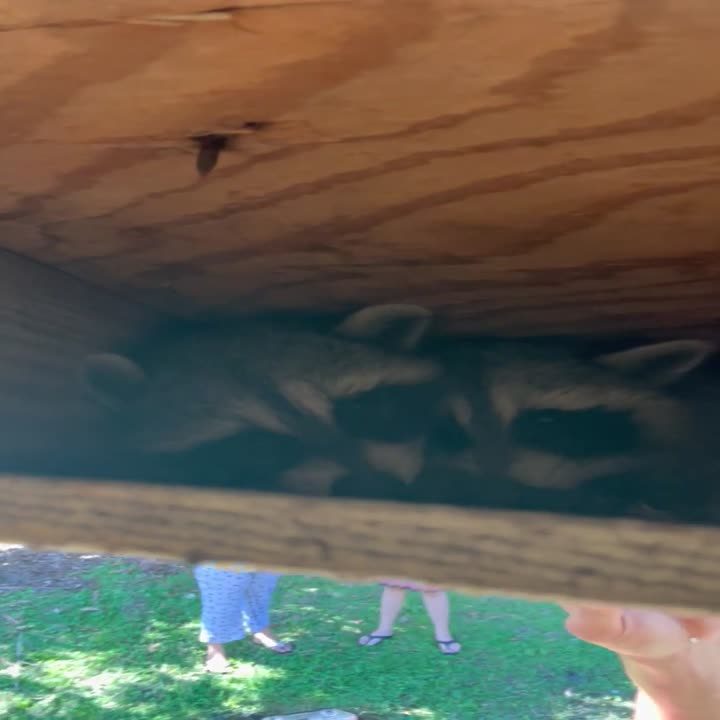
Out in the field
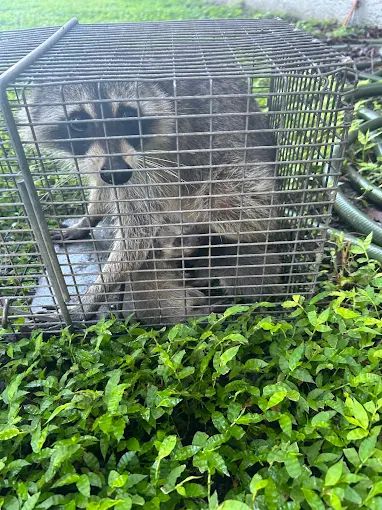
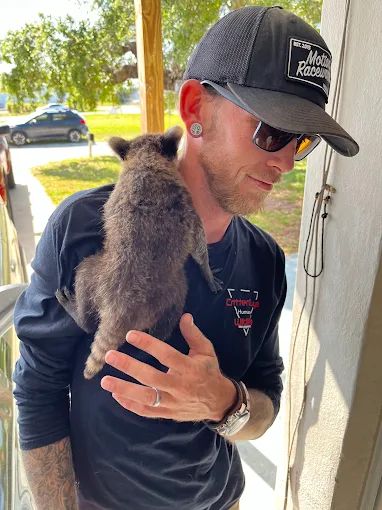
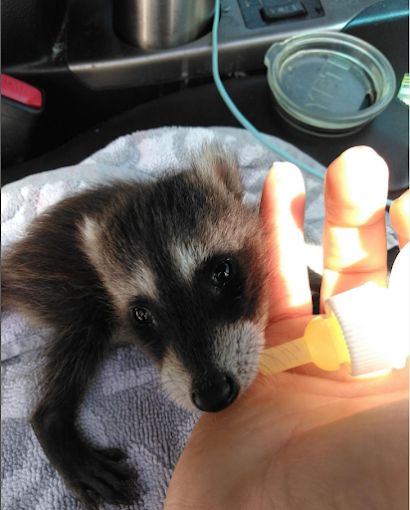
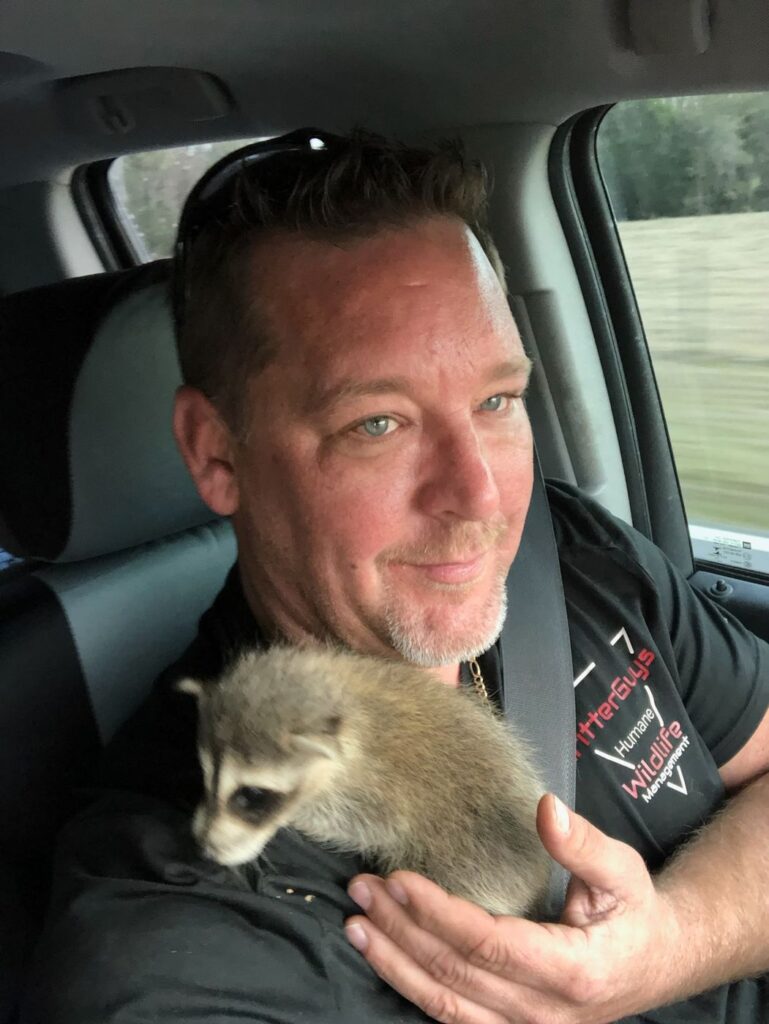
Our raccoon trapping and removal process
Here’s what raccoon removal looks like from the first visit to the last repair.
Find the den and the door
We check the roof line, attic, chimney and crawl space to find where the raccoon is getting in and where it’s sleeping. In spring, we look and listen carefully for kits.
Remove the adults humanely
We use live traps placed on the travel route or a one-way exit fitted to the entry hole. Every step follows FWC rules for trapping and handling wildlife in Florida.
Reunite mom and babies
If there are kits, we remove them by hand and keep them with their mother whenever possible. Leaving young behind is cruel, and it guarantees a smell problem later.
Seal and repair
We close the entry with heavy-gauge materials raccoons can’t pull apart, repair the soffit or vent, and cap chimneys if that was the route. Our wildlife exclusion work in St. Pete goes over that in more detail.
St. Pete raccoon jobs, in customers’ words
4.9
141 reviews on Google
★★★★★
We had a raccoon who preferred to use our pool and back yard as a personal toilet. After trying the usual internet suggestions we called Kevin the Critter Guy. The first night the trap was set the raccoon was caught. The bad news? It was so big that the trap was forced open in 15″. Over the next several weeks we added traps, tried different baits and different locations to no avail. Kevin never gave up and ultimately used red fox urine. It hasn’t been back since. When a service goes as planned it’s an easy job. The true test? What is the response when it’s not easy. Kevin never backed off and ultimately the raccoon is gone. Highly recommended.
Paul MurgoGoogle review
★★★★★
RELIABLE! AFFORDABLE! KNOWLEDGEABLE! HONEST! From the first call to Annie to meeting Mike literally an hour later was remarkable. What started as a nightmare with a family of raccoons in my attic turned into a smooth successful experience. No need to shop around. I reached out to 4 other companies with higher prices and the inability to come asap. I will definitely recommend them to my friends and neighbors!
Gini AnthonyGoogle review
★★★★★
CritterGuys are the best! From my first positive interaction with Annie to my continued excellent service through Mike, CritterGuys have been superb! So far, they have quickly and professionally removed two raccoons and have set more traps in case more may follow. CritterGuys have been prompt, courteous, and professional. I will recommend them and call again if needed! Thank you, CritterGuys!
Michelle FabrizioGoogle review
Read every review on Google or see more Critter Guys reviews
Attic raccoons vs. crawl space raccoons
Both happen a lot in St. Petersburg, and they need slightly different handling.
| In the attic or soffit | Under the house |
|---|---|
| Usually a mother raising kits | Often a lone adult or a male |
| Enters at a soffit, vent or roof return | Enters at a vent screen or access door |
| Damage to insulation and ducts | Damage to vapor barrier and floor insulation |
| Latrine in a corner of the attic | Latrine near the crawl space opening |
Health and cleanup after raccoon removal
Raccoons are one of the animals most often found with rabies in Florida, so never corner one or try to grab a baby. Their droppings can also carry raccoon roundworm, whose eggs stay in the latrine material long after the animal is gone. Sweeping or vacuuming it up without protection stirs it into the air.
That’s why we treat cleanup as part of the job. Once the raccoons are out and the hole is sealed, we can remove the latrine and soiled insulation, sanitize the area and deal with the odor. Our St. Pete attic cleanup service handles that step.
What about the chimney?
Older St. Pete homes with fireplaces sometimes have uncapped flues, and raccoon mothers like the smoke shelf as a nest. We remove them from the top or the damper, then recommend a proper chimney cap so it doesn’t happen again.
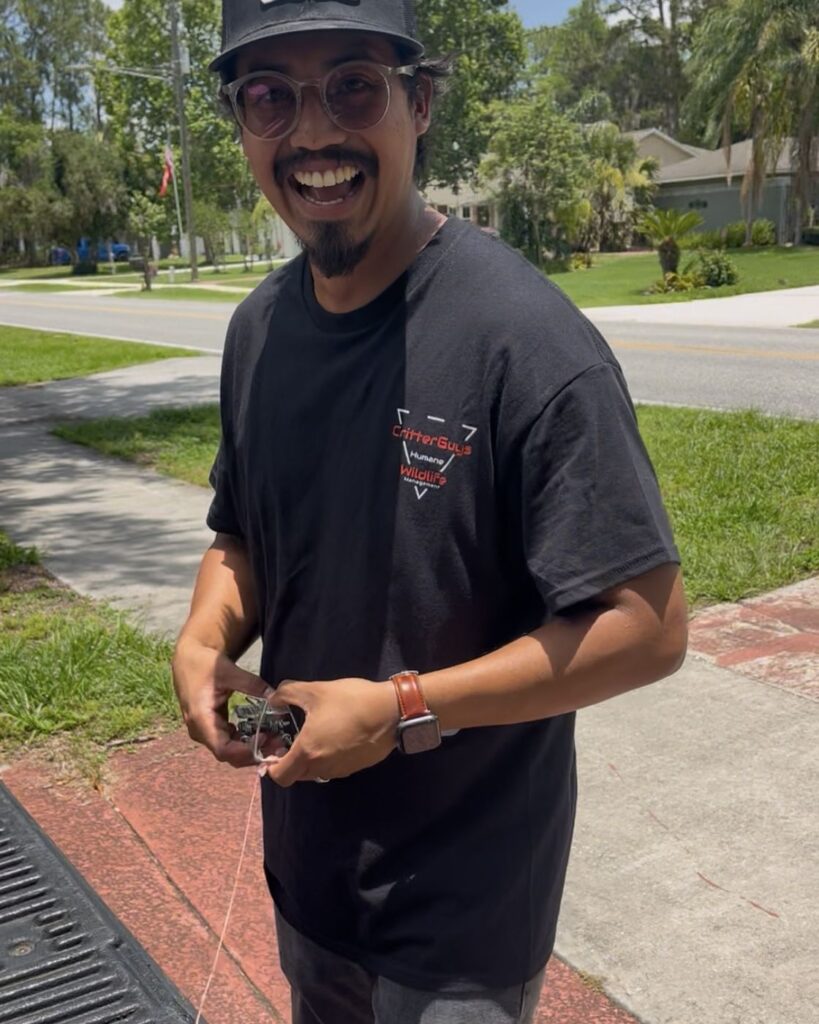
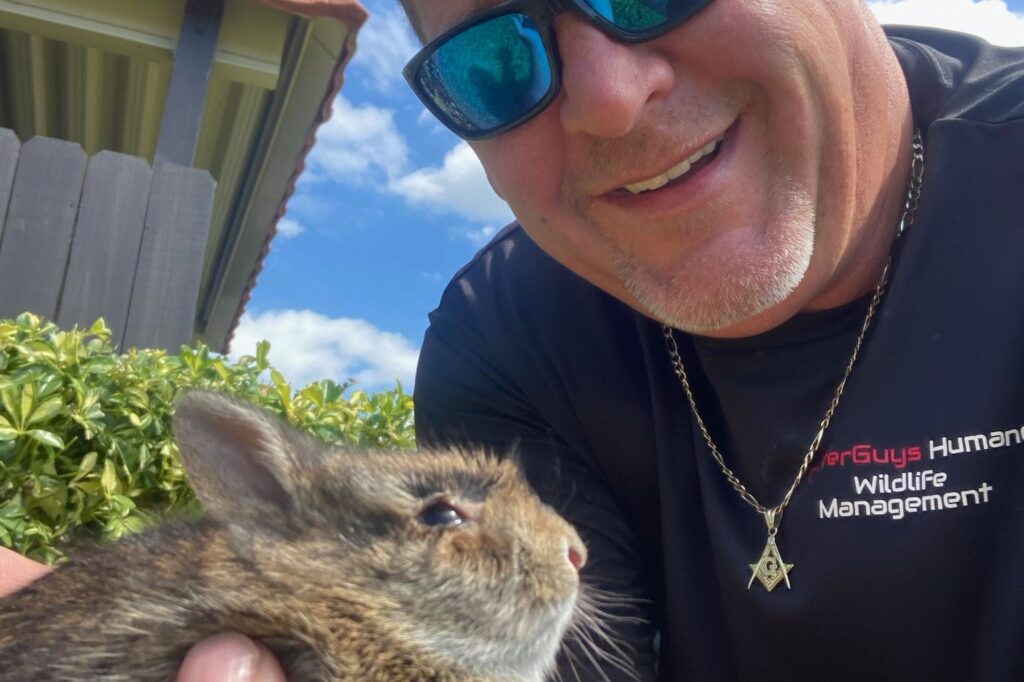
Don’t seal the hole while they’re inside
Closing an entry with a raccoon still in the attic leads to torn ceilings, chewed ducts, or a mother ripping a new hole to reach her kits. Make sure they’re out first, which is exactly what our inspection confirms.
Raccoon removal near St. Petersburg
More wildlife services in St. Petersburg
What St. Petersburg homeowners ask about raccoon removal
Have a question that isn’t here? Call or text (321) 203-6963 and we’ll help.
How long does raccoon removal take in a St. Petersburg attic?
Most jobs take a few days to about a week from setting traps or a one-way exit to the final seal. A mother with young kits can take a little longer because we want the whole family out together. We’ll tell you the expected timeline after the inspection.
What does it cost to get raccoons out of my St. Pete home?
We quote after the inspection, once we know what’s going on in your St. Pete home. The price depends on how many raccoons there are, whether there are kits, how many openings need sealing, how hard the roof is to access and whether cleanup is needed.
Are raccoons in my attic dangerous?
They can be if handled. Raccoons are a common rabies carrier in Florida and their droppings can carry roundworm, so keep pets and kids away and don’t try to remove them yourself. Left in place, they also damage insulation, ducts and wiring.
Will you relocate the raccoons you catch in St. Petersburg?
We handle every animal under FWC rules for trapping and relocation in Florida. Our approach is humane from start to finish: no needless harm, and mothers and kits stay together whenever possible.
Why do raccoons keep coming back to my waterfront house?
Waterfront lots sit right on the raccoons’ main travel route, so a new one will test any weak spot. The fix is sealing every gap on the house, including the ones nobody is using yet, plus securing trash and pet food outside.
Can raccoons get in through a pool cage or lanai screen?
Yes, they tear screen panels easily and use the lanai roof to reach the main roof line. We check the pool cage and lanai as part of the inspection and can tell you where they’re crossing.
Get the raccoons out of your St. Pete home
Send the form or call or text (321) 203-6963. For more on how we work statewide, see our main raccoon removal page, or our raccoon work in Pinellas Park just to the north.